EVA Industries cares deeply about the micro and macro environments in which it operates and continuously looks for ways to reduce its carbon footprint and impact on both. It is accepted that the company should continuously strive to employ the three “Rs” of waste management, namely Reduce, Reuse and Recycle, in its day-to-day operations. Much effort is placed on encouraging employees of the company, through guidance from directors and management, to adopt these mindsets.
EVA Industries has started by looking for ways to “reduce” its consumption of raw materials and thereby reduce its waste output. Wherever possible, production is reduced to the bare minimum requirement of material, labour and overhead consumption. A simple gesture, such as switching off unused lights, contributes towards lower electricity consumption. An emphasis on correct manufacturing through the use of efficient new moulds and energy-reducing machines makes a difference to cycle times, energy consumption and material usage.
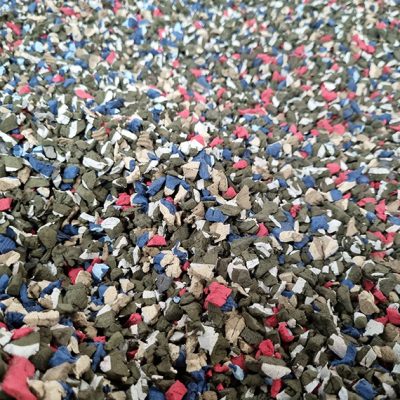
In terms of “reuse” and “recycling”, EVA Industries has the ability, through its manufacturing process, to reuse certain recycled materials in production batches. This process can utilise up to 15% of the batch weight in reusable materials, while specifications and colour combinations remain unaffected. EVA Industries consumes a fair amount of PVC material monthly and reuses 30% of the ‘waste’ materials generated in its own manufacturing processes. The balance of the 70% of waste material is processed and sold to shoe sole manufacturers, who reuse the material to produce gumboots, school shoes or military boot soles. Since 2015, EVA Industries has actively marketed its own waste as by-products (certain reusable recycled materials) to companies specialising in underfloor protection matting, which makes use of the ‘shredded’ post-stamping EVA/EPDM sheeting used for manufacturing beach thongs. This shredded material is converted into a protective shock-absorption material layer used in artificial turf at sports and recreational facilities locally and abroad.
The company continues to look for ways to reuse, reduce and recycle materials that can benefit all stakeholders and future generations.